











Only 50 spots, including limited travel grants, are available for this one-of-a-kind conference and we encourage you to register early.
If you are able to join us, kindly RSVP by registering to the conference using the link below. Registrations will close on April 16th, 2026, or when the conference reaches capacity. As space is limited, we encourage you to RSVP at your earliest convenience if you plan to attend.
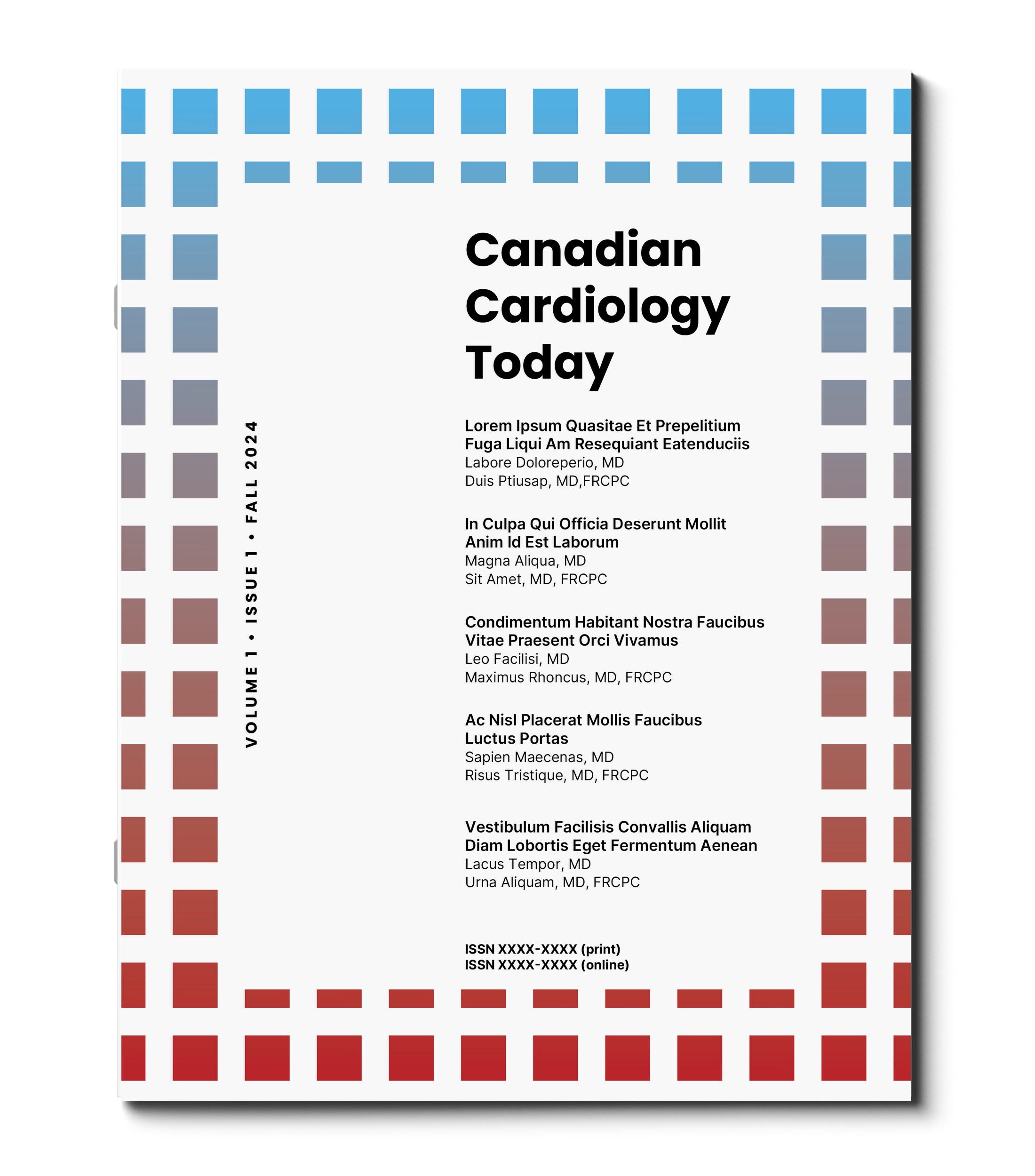
Canadian Cardiology Today provides a forum for the clinical community to share real-world experience and the latest best practices in the treatment and management of cardiac disease.
The journal is published thrice yearly in English and is circulated to over 750 cardiologists across Canada. It features peer-reviewed articles that present robust clinical perspectives and practical insights into disease management.
Founded in 2009, Catalytic Health is one of Canada’s largest medical education agencies, the largest independent medical publisher in the country, and an industry leader in innovative events and services for the life sciences industry, reaching over 50,000 Canadian clinicians per year with its educational programs, services and platforms.
© 2026 All Rights Reserved.
Dr. Beth Abramson MD is the Paul Albrechtsen Professor in Cardiac Prevention and Women’s Health in the Division of Cardiology at St. Michael’s Hospital, University of Toronto. She is also an Associate Professor of Medicine at the University of Toronto.
She enjoys educating the public on heart health and is a national spokesperson for the Heart and Stroke Foundation. Her book, Heart Health for Canadians, published in 2013, aims to help people prevent and understand heart disease. In 2015, she was awarded the prestigious Harold N. Segal award of Merit, in recognition of her many contributions to preventing heart disease amongst Canadians. She is a member of the American Society of Preventive Cardiology Women’s working group, and has co-chaired the American College of Cardiology’s Hypertension working group. In 2021, she was invited to become a member of the American College of Cardiology Prevention Council.
In addition, Dr. Abramson is a founding member and inaugural Chair (2018-2020) of the Canadian Women’s Heart Health Alliance Education Working Group, which has created an electronic course and toolkit on Women and Heart Disease for MDs. Dr. Abramson’s has also been involved in the North American Menopause Societys’ (NAMS) awareness efforts.
She currently directs a fellowship in Preventive Cardiology at the University of Toronto and has recently established an academic Cardiometabolic Clinic at St. Michael’s Hospital to close care gaps. Dr. Abramson also works out of the Toronto Cardiac Clinic.
Interventional cardiologist Kevin Bainey is a graduate of the University of Alberta’s medical school. After completing his core internal medicine and clinical cardiology residencies in Edmonton (University of Alberta), Dr. Bainey pursued an interventional cardiology fellowship at Harvard University, Boston and subsequently became a clinical scholar in interventional cardiology at McMaster University, Hamilton. He was the recipient of numerous awards during his undergraduate and residency medical education. Dr. Bainey also completed a Master of Science degree in health research methodology at McMaster. In 2011, he was recruited to the University of Alberta’s Division of Cardiology and works at the Mazankowski Alberta Heart Institute.
Dr. Bainey is faculty at the VIGOUR Centre in the Katz Group for Pharmacy and Health Research. He leads and collaborates on numerous clinical trials for therapies for heart conditions. Among his research interests are reperfusion Injury in ST-elevation myocardial infarction, ethnic-based clinical outcomes focusing primarily on South Asians with coronary artery disease, myocardial infarction with non-obstructive coronary arteries and heart attacks in women. His research, funded by provincial and national agencies including Heart and Stroke Foundation of Canada, Canadian Institutes of Health Research and Alberta Health Services Quality Innovation Fund, has been published widely in peer-reviewed journals. These include American Journal of Cardiology, American Heart Journal, International Journal of Cardiology, Circulation, Cardiovascular Interventions, Journal of American College of Cardiology, New England Journal of Medicine, and Canadian Journal of Cardiology.
Dr. Guillaume Marquis-Gravel is an interventional cardiologist at the Montreal Heart Institute, and an associate professor at Université de Montréal since 2020. He is a Junior 2 clinical research scholar of the Fonds de la Recherche du Québec – Santé (FRQS). He completed his medical training (M.D.), a Masters in Biomedical Sciences (M.Sc., with Honors), a residency in internal medicine, and a residency in adult cardiology (with Honors) at the Université de Montréal. He then completed a 1-year clinical fellowship in interventional cardiology at Duke University (Durham, NC, United States), followed by a 2-year clinical research fellowship at the Duke Clinical Research Institute.
He is the primary author or co-author of more than 130 peer-reviewed publications, including in the New England Journal of Medicine, JAMA Cardiology, the Journal of the American College of Cardiology, and Circulation, and of 5 book chapters. He is an associate editor of the Canadian Journal of Cardiology. His main research interests revolve around the antithrombotic management of acute and chronic coronary artery disease, prevention of contrast-induced nephropathy after PCI, and development of innovative clinical trial methods. He is the principal investigator of research projects funded by the Canadian Institutes of Health Research (CIHR), the Heart & Stroke Foundation, and the Canadian Heart Function Alliance. He is the co-chair of the 2023 Canadian Cardiovascular Society/Canadian Association of Interventional Cardiology Focused Update of the Guidelines for the Use of Antiplatelet Therapy.
Dr. Andrade is the Director of Electrophysiology at Vancouver General Hospital (VGH). He has served as co-chair of the Canadian Cardiovascular Society (CCS) Atrial Fibrillation Guidelines from 2017-2025, and the CCS Device Therapy Guidelines (since 2022). He has served on the executive for the Canadian Heart Rhythm Society (CHRS) as chair of the Education Committee (2013-2016) and chair of the Device Advisory Committee (2021-2025). Over the past 12 years Dr. Andrade has held multiple roles with cardiac services BC, the provincial agency responsible for delivering cardiac care in British Columbia, including the inaugural medical chair for Heart Rhythm Disease for the BC Cardiovascular Disease Network.
Dr. Andrade has authored over 340 scientific publications, predominantly in the domain of atrial fibrillation. His publications can be found in journals such as the New England Journal of Medicine, The Lancet, Circulation, the European Heart Journal, Journal of the American College of Cardiology (JACC), and the Journal of the American Medical Association (JAMA). As a result of these contributions he has been recognized as a “Highly Ranked Scholar”, placing 5 worldwide for Atrial fibrillation research and for Catheter Ablation research.
Dr. Andrade has received numerous awards including the Canadian Institute of Health Research CIHR-ICRH/CCS Mid-Career Lecturer Award in Cardiovascular Sciences, the VMDAS Scientific Achievement award, the Canadian Heart Rhythm Society George Klein Award, the Clinical Faculty Award for Excellence in Research (UBC), the Donald M Whitelaw Award, the Alumni Achievement Award (Ottawa), the Robert E. Beamish Award, the Michael Smith Foundation for Health Research Clinical Investigator Scholar Award, the CCS Bayer Award, the Joseph J. Diamond Memorial Prize for Research, the Peter J Armanious Award , and was recognized by the Vancouver Whitecaps as Frontline Hero of the Match.
Dr. Andrade has delivered more than 550 national and international lectures and is the author of several textbooks, book chapters, and medical apps, and has acted as a consultant to regulatory agencies, in medicolegal matters, and to the film and television industry.
Dr. Angaran is a Cardiac Electrophysiologist at St. Michael’s Hospital and an Assistant Professor of Medicine in the Division of Cardiology at the University of Toronto. He is the current Director of the Cardiac Arrhythmia program at St. Michael’s Hospital.
Dr. Angaran received his medical degree from the University of Toronto in 2004. He continued training in Internal Medicine and Cardiology at the University of Toronto, and received certification by the Royal College of Physicians and Surgeons of Canada in Internal Medicine in 2008 and Cardiology in 2010. He completed an Electrophysiology Fellowship at the University of Western Ontario in 2012. He then joined the Arrhythmia Service at St. Michael’s Hospital in 2013. He subsequently completed his Master’s Degree in Clinical Epidemiology at the Institute of Health Policy, Management and Evaluation at the University of Toronto in 2019.
Clinical and Academic Interests / Areas of Expertise:
Dr. Robert Boone is an Interventional Cardiologist based at St. Paul’s Hospital in Vancouver having trained in Vancouver, Toronto, Calgary and the London School of Hygiene and Tropical Medicine. He has an active interest in minimally invasive techniques for heart valve intervention, and has led the establishment of a trancathtee mitral and tricuspid program in British Columbia.
He has recently become the Cath Lab director at St. Paul’s Hospital, and maintains a small general cardiology clinic in Vancouver, an outreach clinic in Whitehorse, and active clinical role in the Cardiac Intensive Care Unit.
Dr. Cheng is an Endocrinologist at Trillium Health Partners and St Michaels’ Hospital and an Associate Professor at the University of Toronto. She was involved with the development of the Diabetes Canada clinical practice guidelines from 2003 to 2020 and was Chair for the 2013 version.
She served as Chair of the Scientific Planning Committee for the 2023 and 2024 American Diabetes Association annual scientific meetings and sat on the planning committees for European Association for the Study of Diabetes annual meeting (2025, 2026) and the International Diabetes Federation Congress 2025. In addition, she is a co-host of the podcast series “Diabetes Care On Air” for the journal, Diabetes Care. In recognition of her contribution to the diabetes community, she has received the Outstanding Physician-Clinician in Diabetes Award from the American Diabetes Association and the Charles H. Best Award and the Gerald S. Wong Service Award from Diabetes Canada. She is also the creator of The Med Ed Pledge – an initiative to increase Diversity & Inclusion in continuing medical education (www.theMedEdPledge.com).
Dr. Kim Connelly is a Cardiologist and Scientist who is both nationally recognized as an expert in echocardiography, cardiovascular MRI and the impact of diabetes upon cardiac function and ventricular remodeling. Dr. Connelly runs a basic research laboratory at the Keenan Research Centre at St. Michael’s Hospital where he focuses upon basic mechanisms of disease – primarily around the role of pathological extracellular matrix accumulation with a focus upon integrin biology and translating discoveries into therapies in humans. He is a member of the editorial board of various journals such as The Canadian Journal of Cardiology and Cardiovascular Diabetology. He has received funding from the Heart and Stroke Foundation Canada, CIHR, Canadian Foundation of Innovation, Ministry of Ontario and industry sources, totally >$5 million as principal investigator. As a co-investigator, he has been part of >$20 million in funding, from the Ministry of Ontario, HSF, CIHR, CFI and industry sources. Dr. Connelly has been recognized for his contributions to science by being awarded a HSF clinician scientist award, a CIHR New Investigator Award, an Early Researcher Award from the Ministry of Ontario, the SC Verma award and the Insulin 100 emerging leader award to celebrate 100 years since the discovery of insulin at University of Toronto, as well as Canadian Cardiovascular Congress YIA 2012. He is past chair of the Canadian Cardiovascular guideline and was chair of the macrovascular complication section for Diabetes Canada CPG 2018. Dr. Kim Connelly is the executive director of the Keenan Research Centre for Biomedical Science and holds the Keenan Chair in Research Leadership, and is the head of the Division of Cardiology, St. Michael’s hospital, Toronto.
Peter Liu is the Chair and Scientific Director of Brain-Heart Interdisciplinary Research, and former Chief Scientific Officer and Vice President of Research at the University of Ottawa Heart Institute. He is also Professor of Medicine at the University of Ottawa and University of Toronto. He was also the former Scientific Director of the Institute of Circulatory and Respiratory Health at the Canadian Institutes of Health Research (the major federal agency that funds all health-relatedresearch in Canada). He is also the co-lead of a new research program on Brain-Heart Interconnections, a $109 million research program funded by the federal government of Canada.
Professor Liu’s research focuses on the pathophysiology, clinical outcomes and early recognition and intervention of heart failure from bench to bedside, now includes brain-heart interconnections. His research links inflammation, senescence with cardiometabolic dysregulation in chronic diseases. He has published over 500 peer-reviewed articles in high impact journals, and received numerous awards andrecognitions for his research and scientific accomplishments, including the Order of Ontario, Fellow of the Royal Society of Canada, Fellow of Canadian Academy of Health Sciences, amongst others.
Dr. Eileen O’Meara is a professor at Université de Montréal and at the Montreal Heart Institute. She completed a Fellowship in Heart Failure, and another in Stress Echocardiography. She holds the MHI Carolyn and Richard J Renaud’s research chair in Heart Failure and is the co-director of the Myocardial Research Axis at MHI. She is a member of the Internal Review Board, of the Research Core Echocardiography Laboratory and of the Pharmacology Committee at MHI, as well as Chief of Outpatients Clinics at MHI.
She was Co-Chair of the Primary Panel for the Canadian Cardiovascular Society and Canadian Heart Failure Society (CCS and CHFS) HF Guidelines and co- chair of the Cardiorenal Protection Guidelines for the CCS/CHFS (2020-2022). She is a section lead for the soon to be published CCS HFpEF guidelines. Her research focuses on cardio-kidney-inflammation interactions and fibrosis in HF, including circulating and cardiac imaging biomarkers; as well as on comorbid conditions that contribute to HF, more specifically diabetes/ adiposity, CKD, anemia and arrhythmia. She is involved in several large HF clinical trials as a National Lead Investigator, SC or EC member.
Dr. Paul M Ridker, MD, MPH serves as the Eugene Braunwald Professor of Medicine at the Harvard Medical School and directs the Center for Cardiovascular Disease Prevention at the Brigham and Women’s Hospital in Boston Massachusetts USA.
Over a 30-year period, Dr. Ridker and his collaborators provided the first proof-of-principle for the inflammation hypothesis of atherothrombosis in humans; the first demonstration that statin therapy is both lipid-lowering and anti-inflammatory; the first FDA-approved diagnostic test for vascular inflammation (hsCRP); the first proven anti-inflammatory treatment for heart disease(canakinumab); and brought into clinical practice worldwide the concept of “residual inflammatory risk”. On multiple occasions Dr. Ridker’s work has altered clinical guidelines for the diagnosis, treatment, and prevention of atherosclerotic disease – the most common cause of death on a global basis. As a direct consequence of this work, multiple novel anti-inflammatory agents targeting interrelated aspects of heart disease ranging from chronic atherosclerosis to acute ischemia to congestive heart failure are under development at nearly all major pharmaceutical companies worldwide.
Dr. Ridker is additionally known for his leadership of over 15 major multi-national randomized clinical trials including PREVENT, JUPITER, SPIRE-1, SPIRE-2, CANTOS, CIRT, PROMINENT, the ongoing ATRIUM trial (addressing abatacept for immune checkpoint inhibitor myocarditis), and the ongoing ZEUS and HERMES trials (addressing IL-6 inhibition to reduce vascular event rates in the settings of chronic kidney disease and heart failure).
Continuously funded by the NIH and the recipient of multiple honorary degrees, Dr. Ridker is a Distinguished Scientist of the American Heart Association and an elected member of the National Academy of Medicine, USA.
Recent international awards include the Antonio Gotto Prize in Atherosclerotic Research (2022); the Hugh Sinclair Award from the British Atherosclerosis Society (2023); the Akiro Endo Award from the International Atherosclerosis Society (2024); and the Anitschkow Prize from the European Atherosclerosis Society (2025).
With an h-index in 2025 of 292 and over 500,000 cumulative citations, Dr. Ridker is among the top 10 most-cited biomedical researchers in any field worldwide.
Dr. Jean-François Tanguay is an expert in Interventional Cardiology with a strong interest in translational research. He is involved in undergraduate and postgraduate medical training and CME education. Dr. Tanguay is Director of the Interventional Cardiology Division at the MHI and Clinical Cardiologist, combining work in the emergency room, the coronary care unit, the outpatient clinic and the catheterization laboratory (1995-ongoing). He is professor at the Faculty of Medicine of the Université de Montréal, and acting president of the association of MD clinician-researcher (AMC2EM).
He was President of the Canadian Interventional Cardiology Association (2002-2005) and Director of the Interventional Cardiology Montreal Symposium (2004-2015). He is Fellow of the Royal College of Physicians and Surgeons of Canada (FRCPC), the Canadian Cardiovascular Society (FCCS), the American Heart Association (FAHA), the American College of Cardiology (FACC), and the European Society of Cardiology (FESC). He was Co-Chair of the CCS Anti Platelet Guidelines Committee and their guidelines’ recommendations were published in the Canadian Journal of Cardiology in 2011, 2013, and 2018.
His research is focused on understanding the interactions between platelets, leukocytes and endothelial cells in order to improve vascular healing. Dr. Tanguay’s investigations brought promising discoveries related to 17beta-estradiol and the specific contribution of estrogen receptors in vascular healing. During his research fellowship, Dr Tanguay studied the early prototypes of bioresorbable drug eluting stents platforms in pre-clinical and thrombosis models. With his colleagues at the MHI, he performed the first coronary implantation of a drug-eluting bioresorbable scaffold (ABSORBTM) in North-America.
Dr. Tanguay is member of steering committees for NIH-, CIHR- and industry-sponsored clinical trials. He has written more than 300 papers in peer-reviewed journals, 6 book chapters & guidelines, and more than 250 abstracts & posters. He has given more than 350 invited lectures or oral presentations at national and international scientific meetings.
In addition to his clinical, teaching and research background, he is the father of four sons, and has been happily married for 35 years.
Dr. Thanassoulis is the Director of Preventive and Genomic Cardiology at the MUHC and a Professor of Medicine at McGill University. His clinical interests are in cardiovascular prevention, dyslipidemia (specifically lipoprotein[a]) and premature coronary artery disease. He currently runs the MUHC Family Heart Clinic for patients with premature CAD and their families with the goal of optimizing their preventive care. His research interests are in the genetics of aortic valve stenosis where he leads an international consortium investigating the role of genomic variation in this disease. He is also working on developing new approaches to optimize cardiovascular prevention in young individuals.